In the modern industrial and commercial sector, high-performance exterior and interior illumination is no longer just a utility; it is a critical component of operational safety, energy management, and legal compliance. CE Certification (Conformité Européenne) stands as the primary compliance passport for markets within the European Economic Area (EEA), signifying that LED floodlight fixtures meet rigorous safety, health, and environmental protection standards. However, identifying a reliable partner among thousands of global manufacturing options requires deep insight into structural supply chain capabilities, testing methodologies, and optical performance specifications.
Guangdong Lijah Light Co., Ltd. presents this comprehensive industry whitepaper to clarify the core technical requirements, manufacturing milestones, and global logistics dynamics that define high-tier LED floodlight manufacturing. By aligning advanced thermal dissipation engineering with international certifications, we empower commercial projects, municipal developers, and global procurement agents to secure high-performance fixtures with maximized return on investment (ROI).
Guangdong Lijah Light Co., Ltd. is a pioneering, technology-driven enterprise specializing in the research, development, engineering, and manufacturing of energy-efficient, smart-enabled LED lighting solutions. Our facility represents the intersection of precision Chinese manufacturing and high-end engineering standards required by the global market. Our scope spans industrial, commercial, and highly specialized sports stadium applications, supplying high-performance floodlights, high bays, and tri-proof configurations worldwide.
Collaborative engineering pipelines that convert photometric requests and simulation layouts into robust, tangible products utilizing high-efficiency SMD chips and advanced driver technology.
Full adherence to CE, RoHS, TÜV, ENEC, VDE, SAA, C-Tick, CB, LM79, and LM80 standards. Our laboratory performs continuous verification steps for thermal thresholds and optical decay curves.
Providing customized optical distributions. Our engineers optimize lux levels, uniformity ratios, and glare evaluation factors (UGR) before hardware deployment to control installation costs.
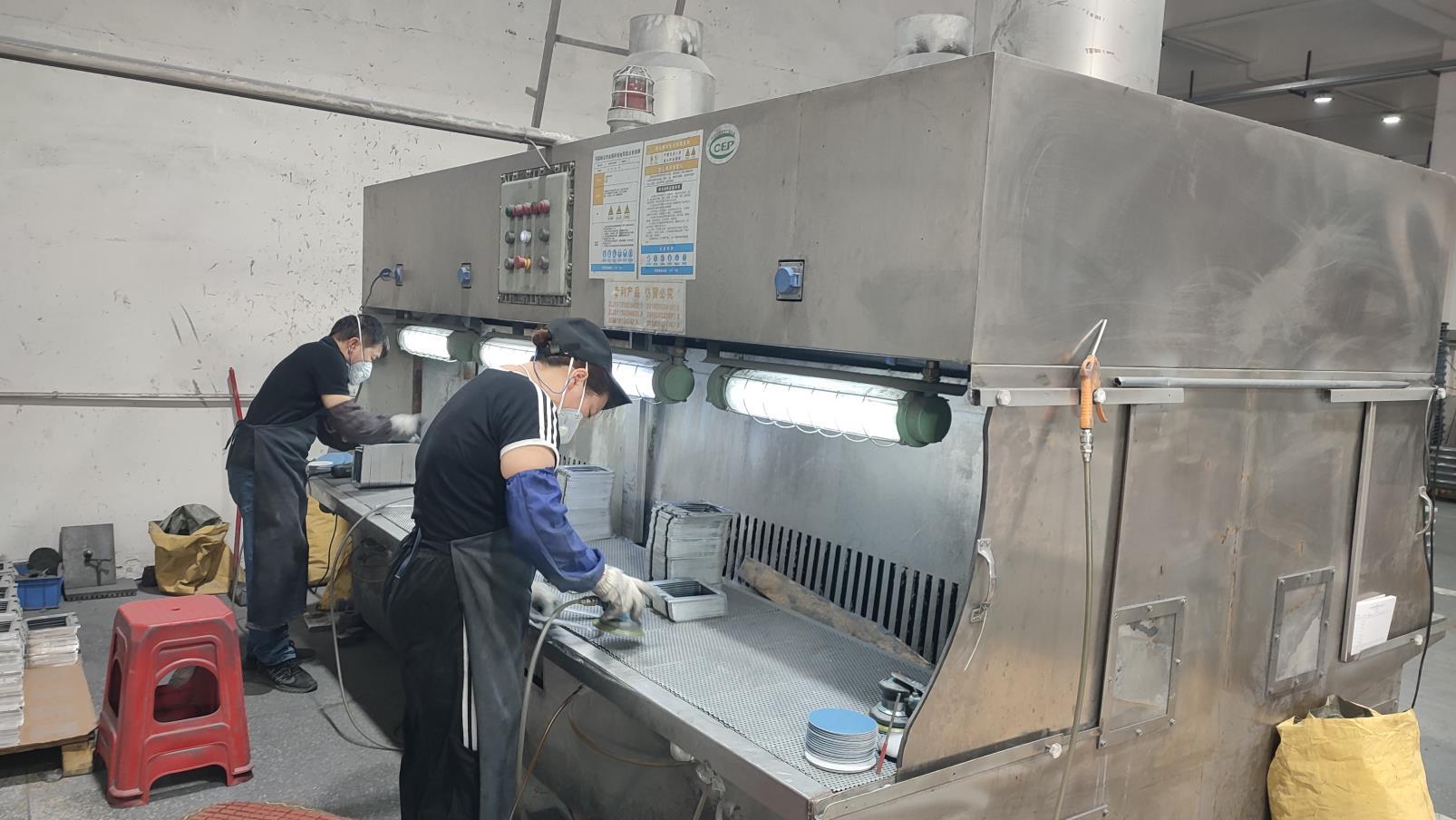
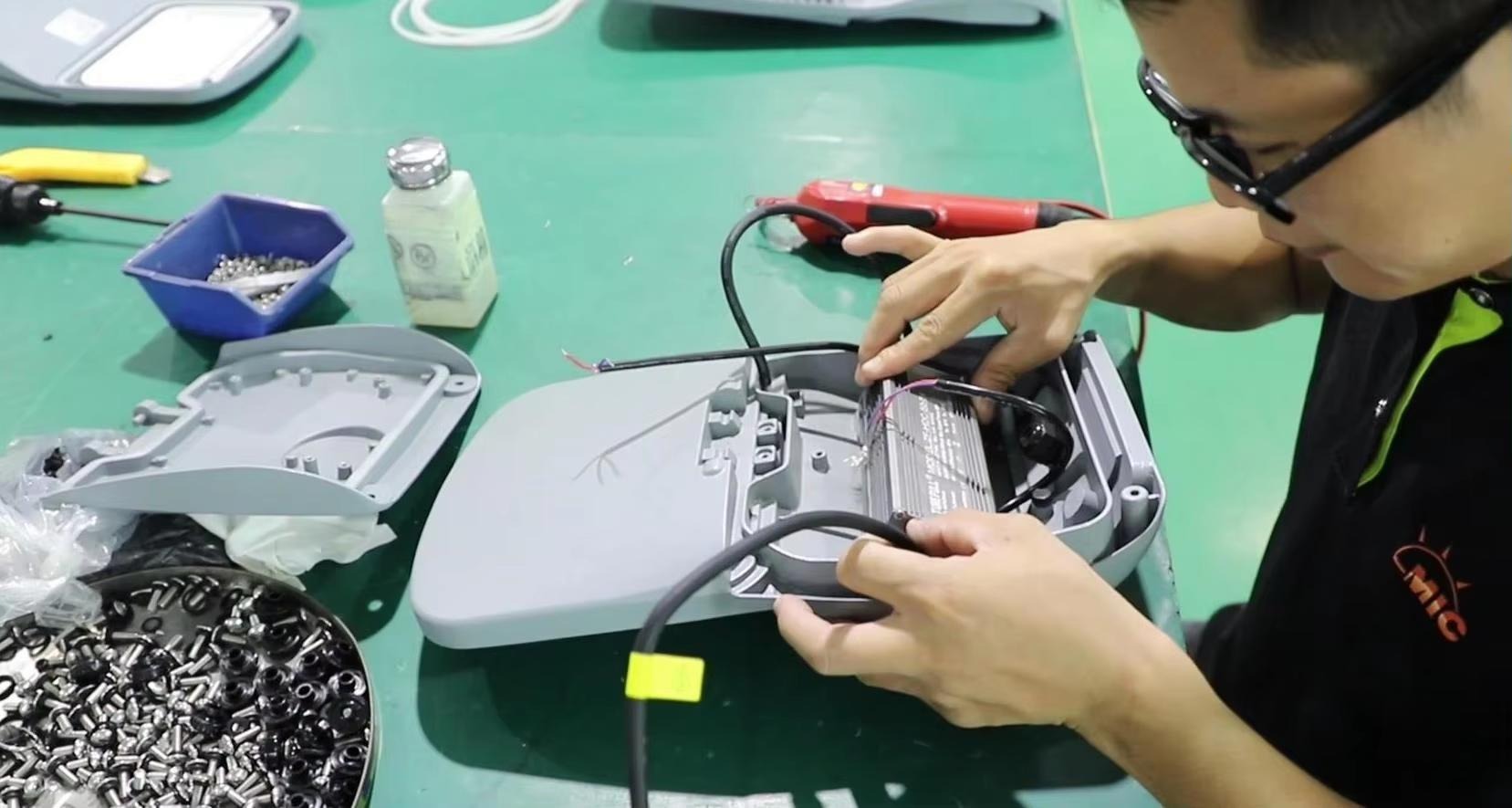
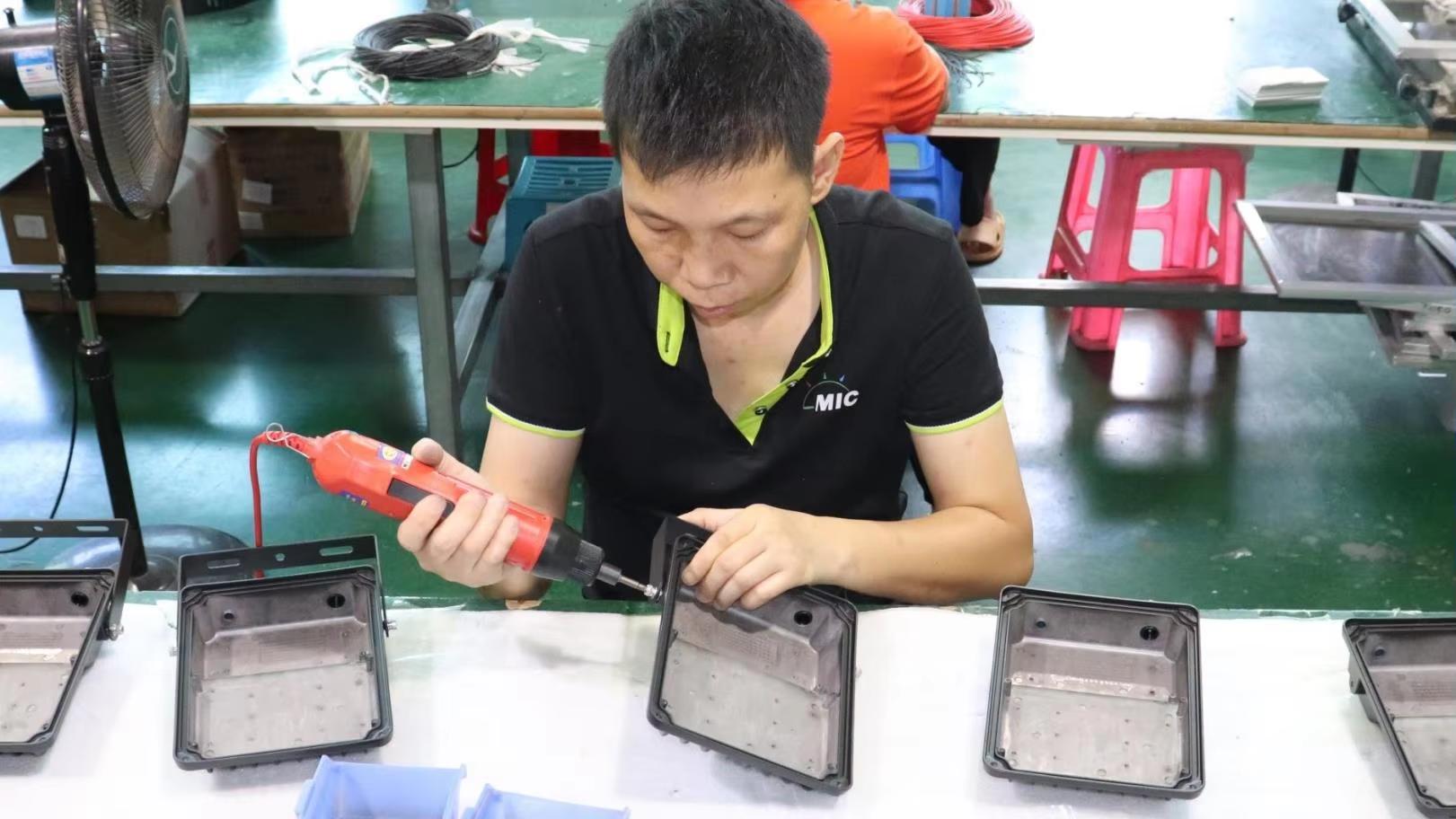
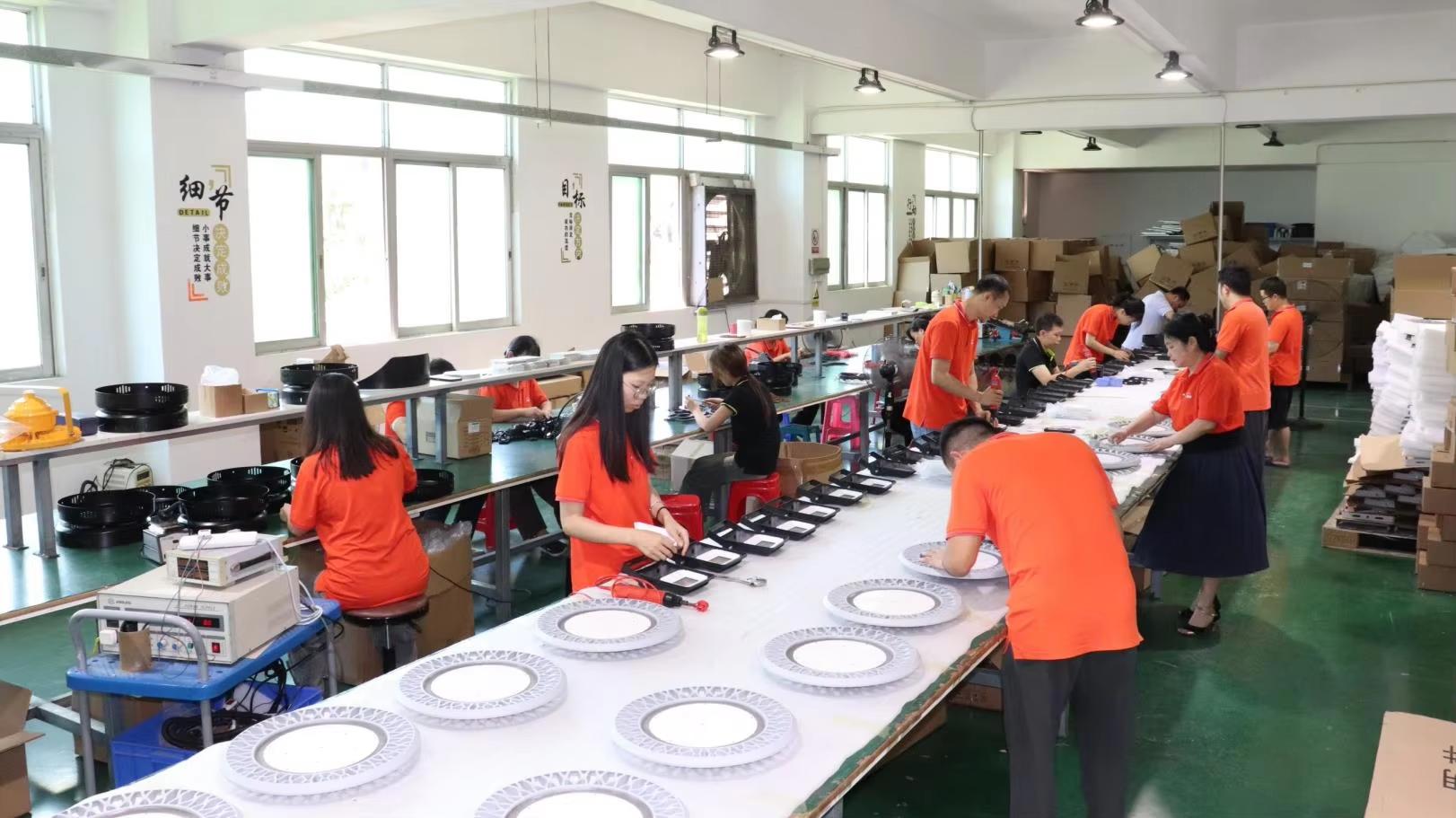
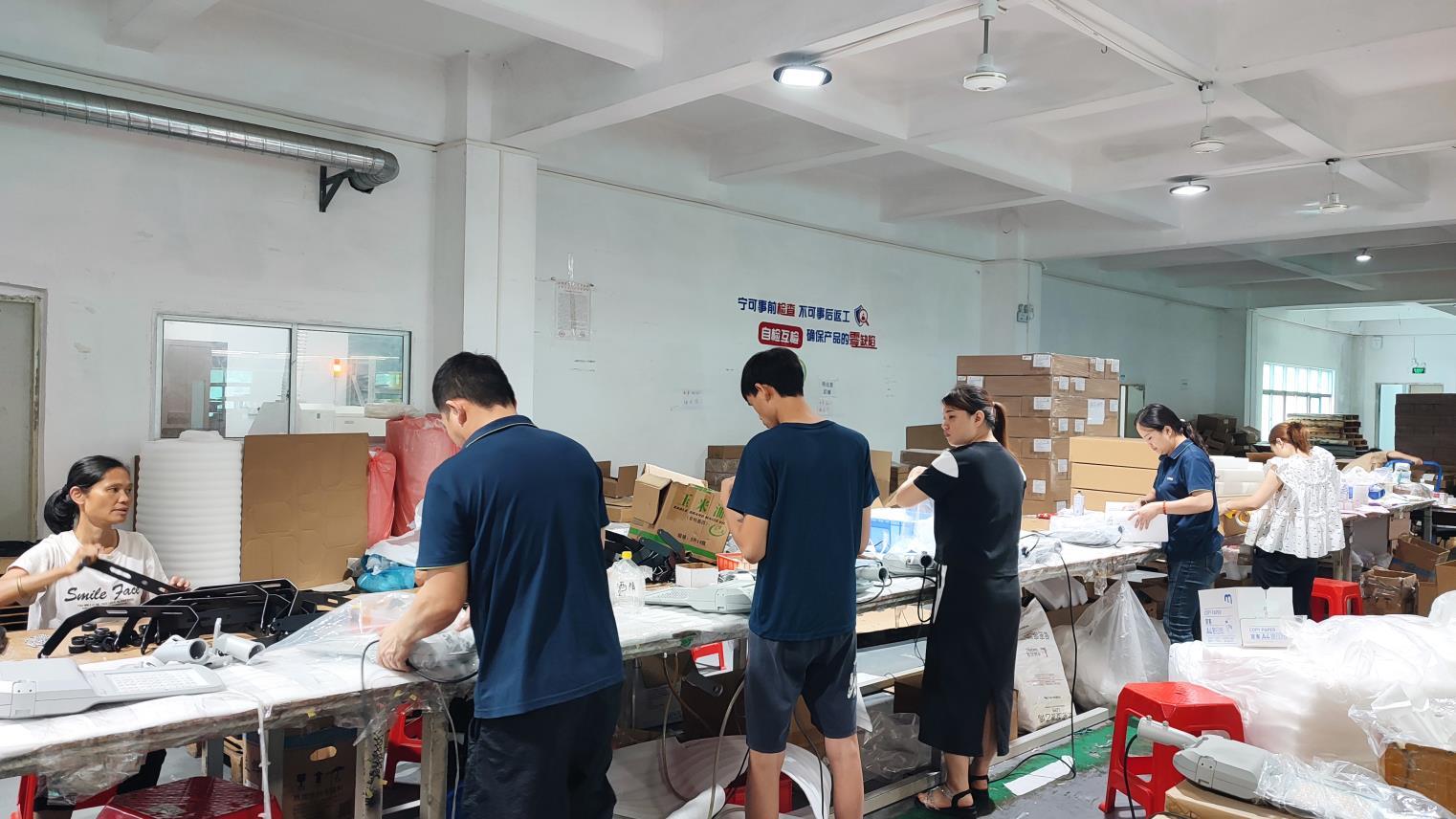
A high-tier floodlight fixture is the result of continuous precision mechanical engineering and electronic quality assurance. Our manufacturing plants operate through structured divisions to ensure high repeatability and consistent quality. Below is the comprehensive step-by-step breakdown of our manufacturing ecosystem in Guangdong:
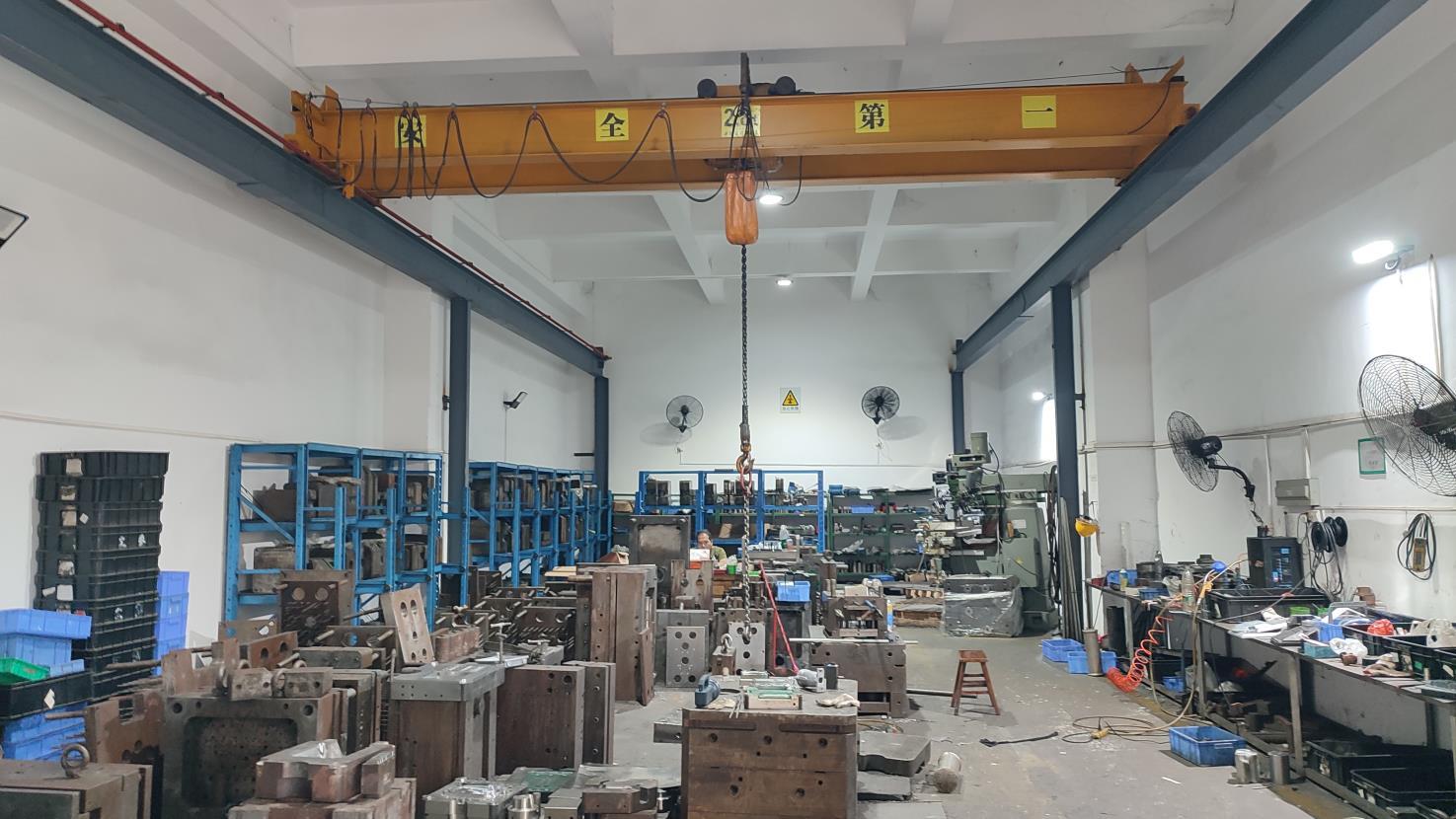
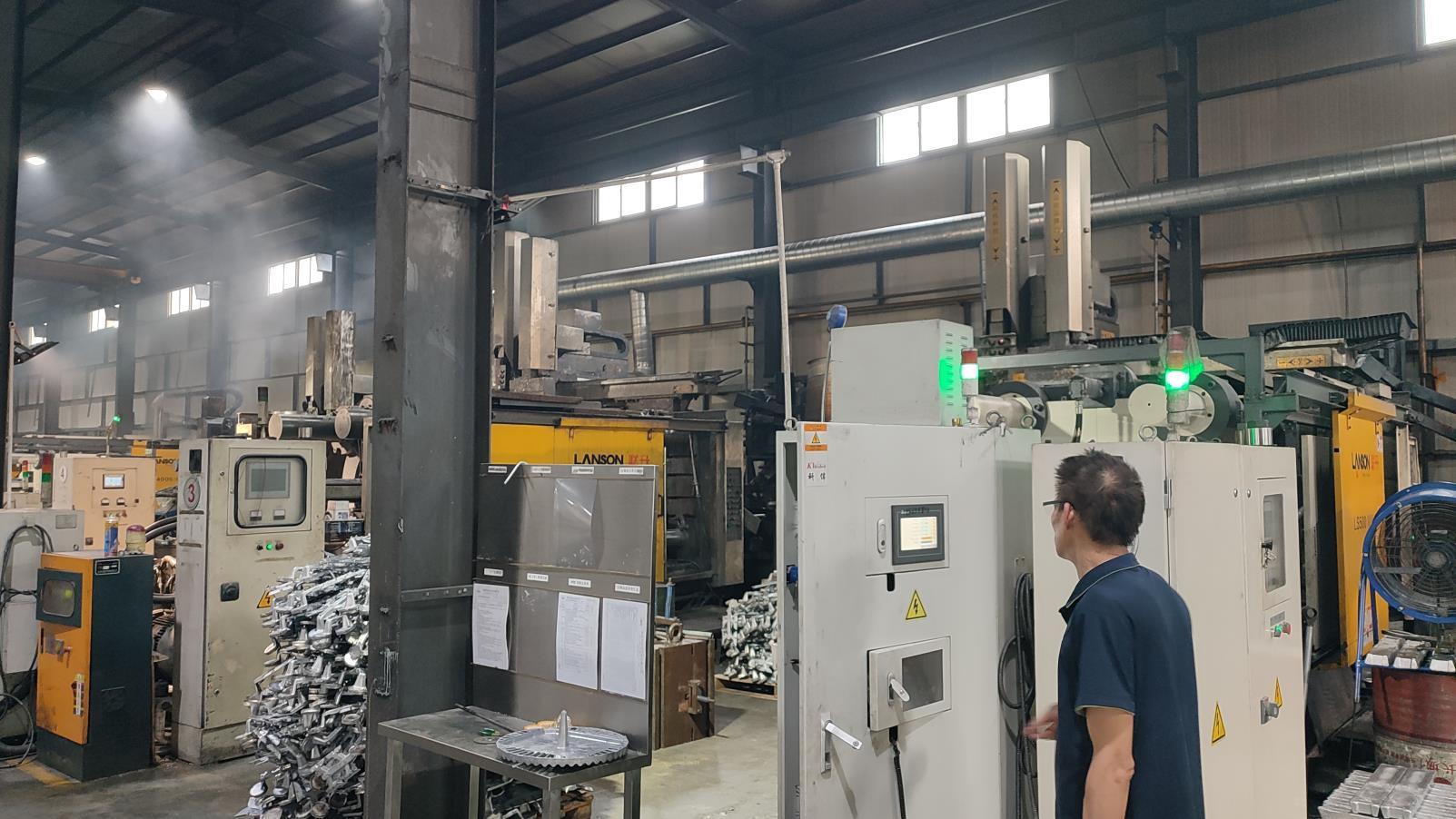
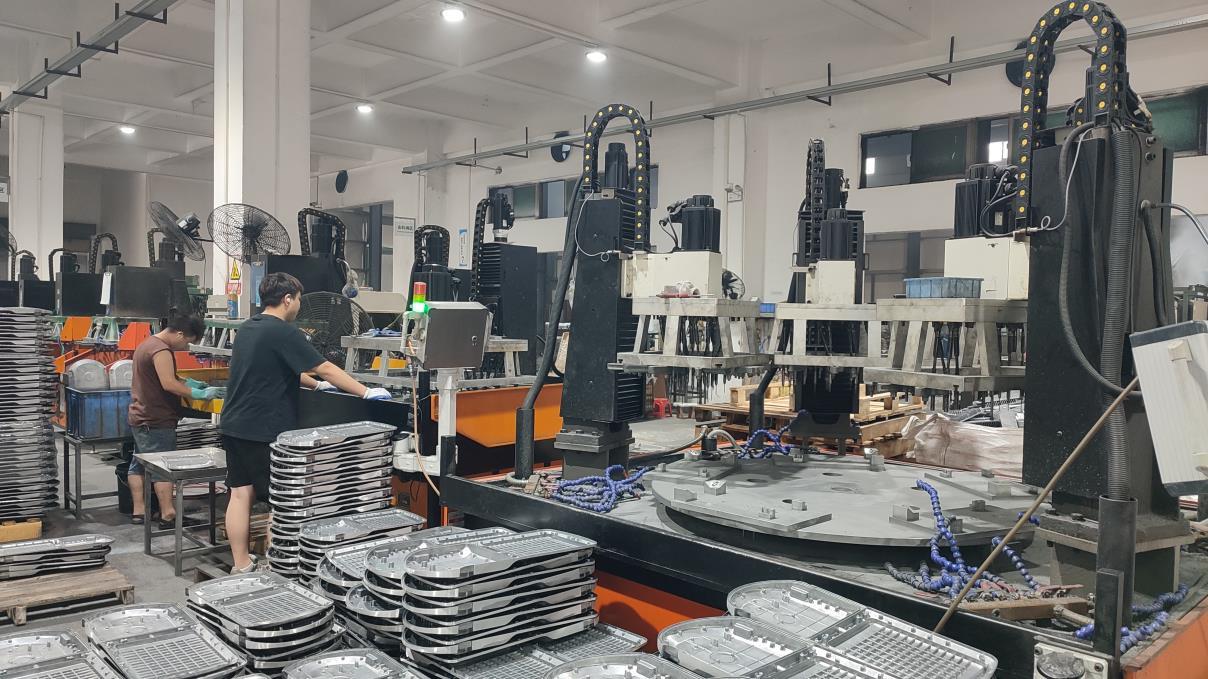
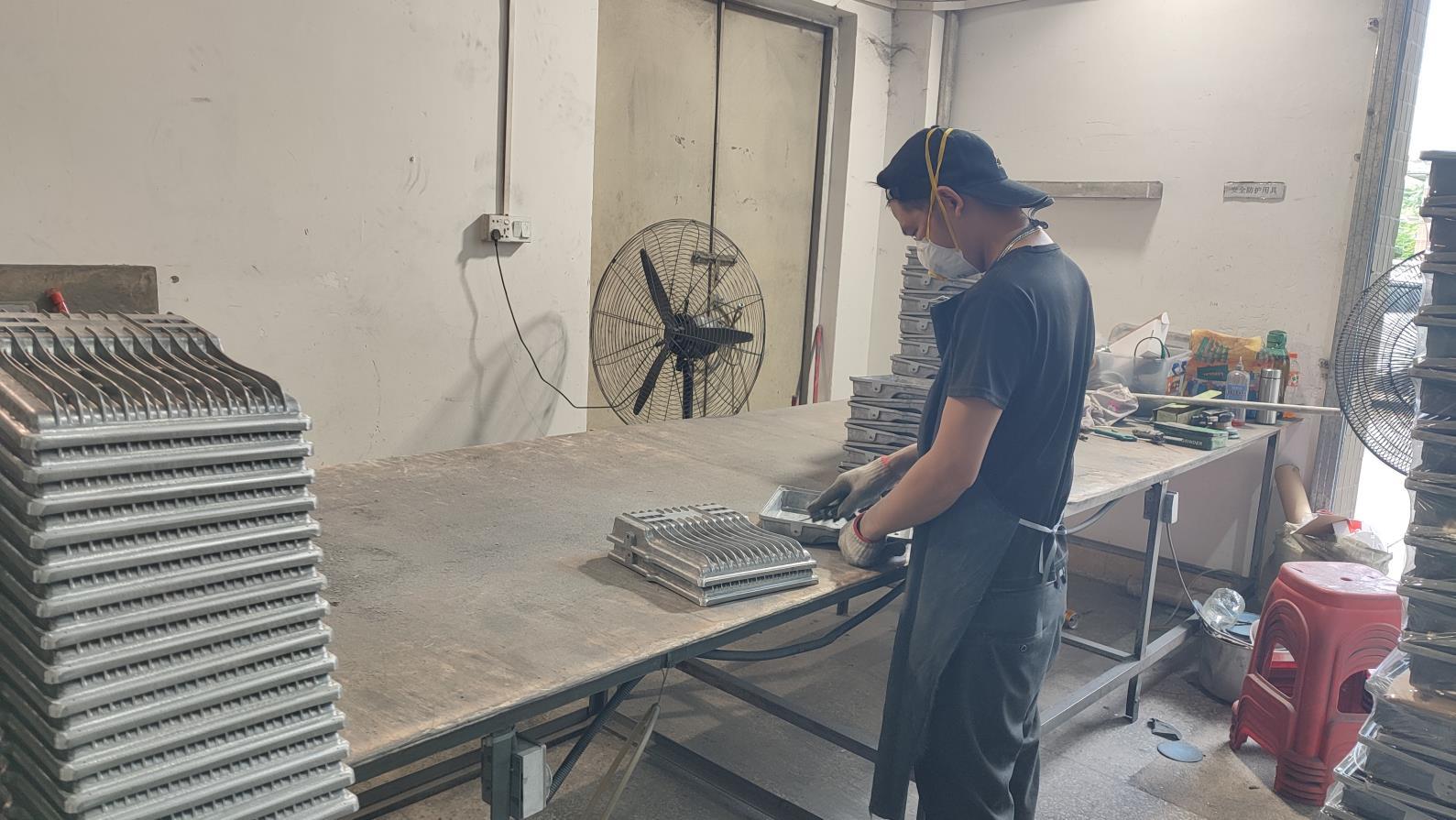
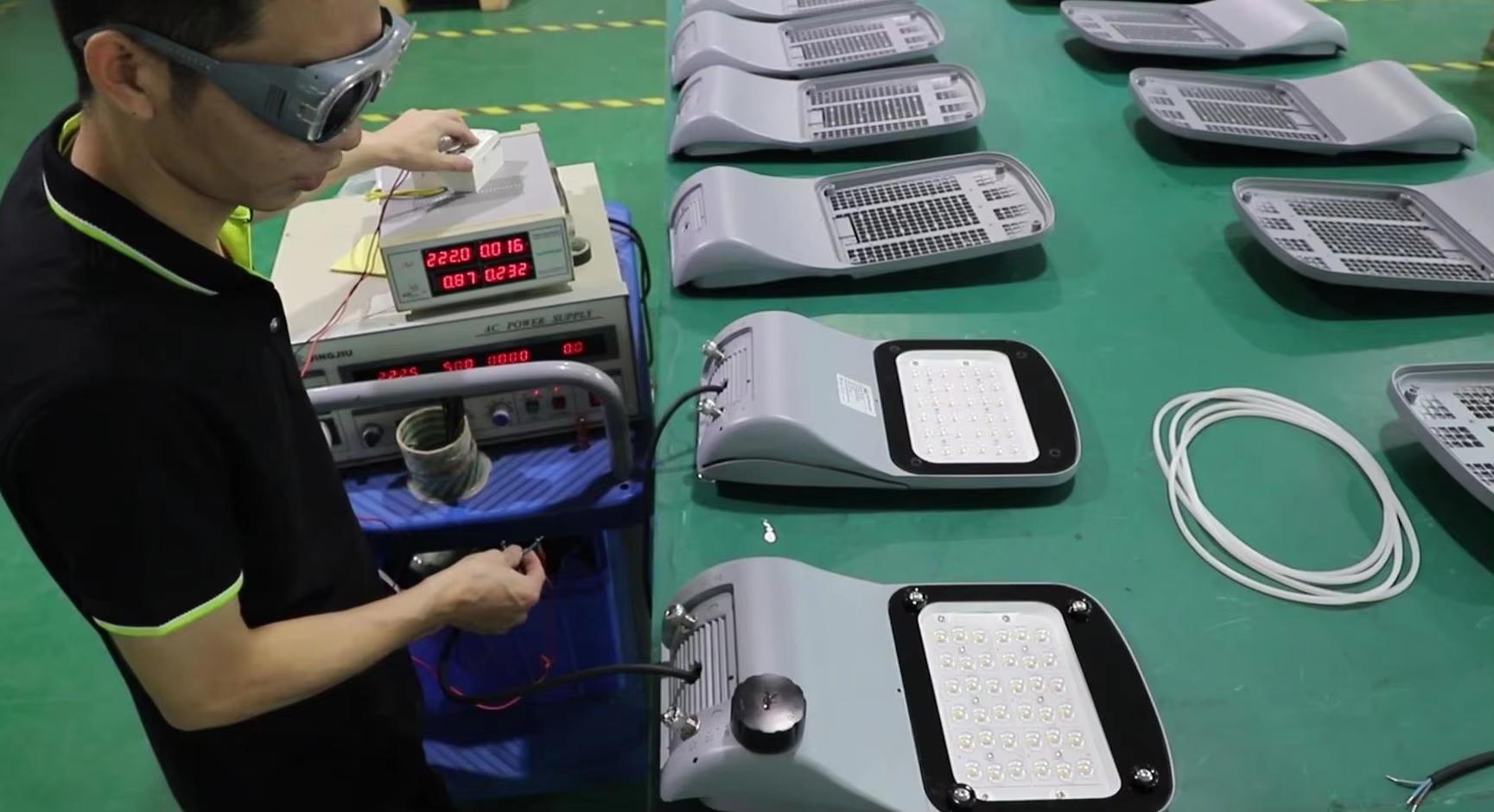
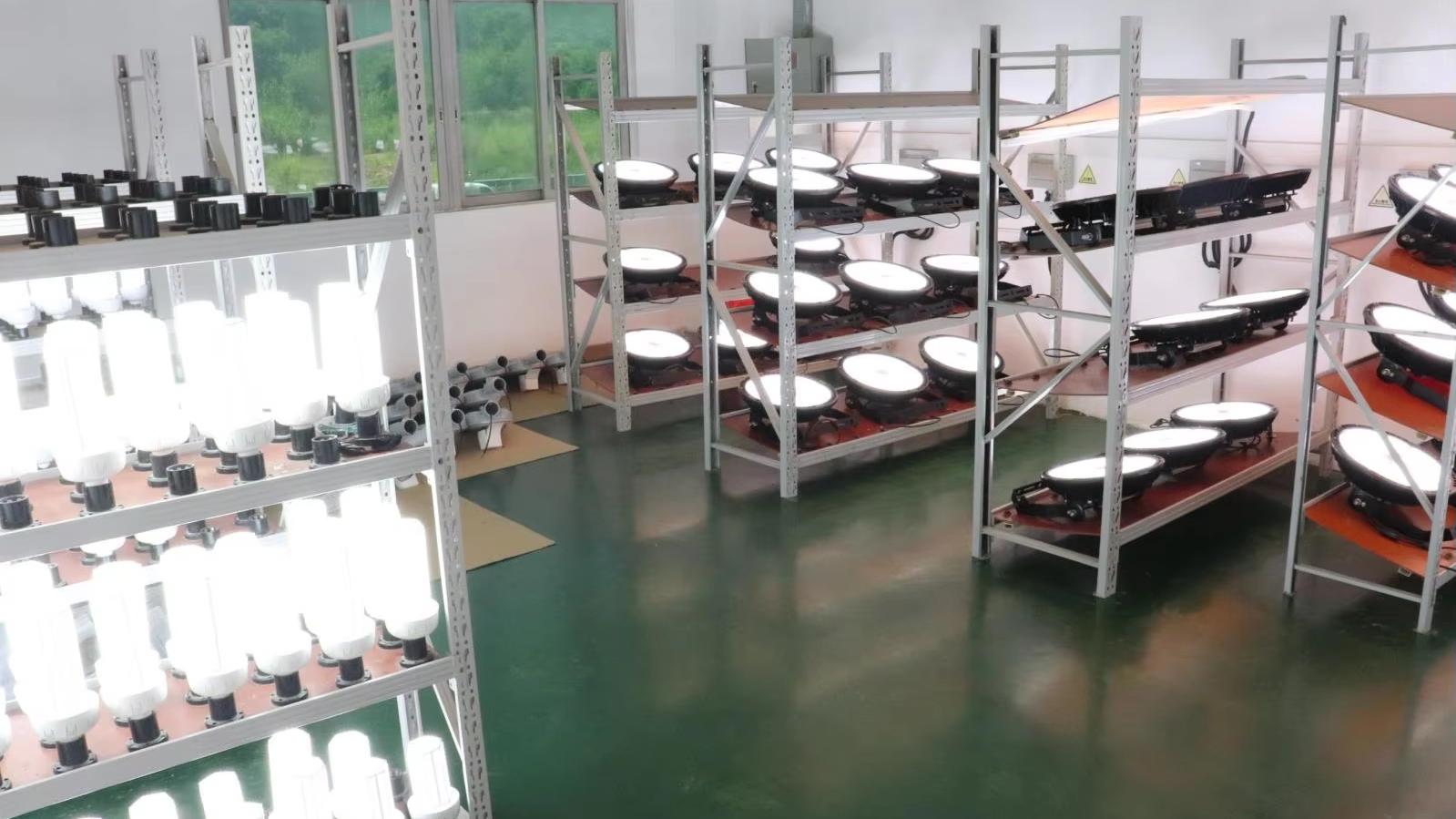
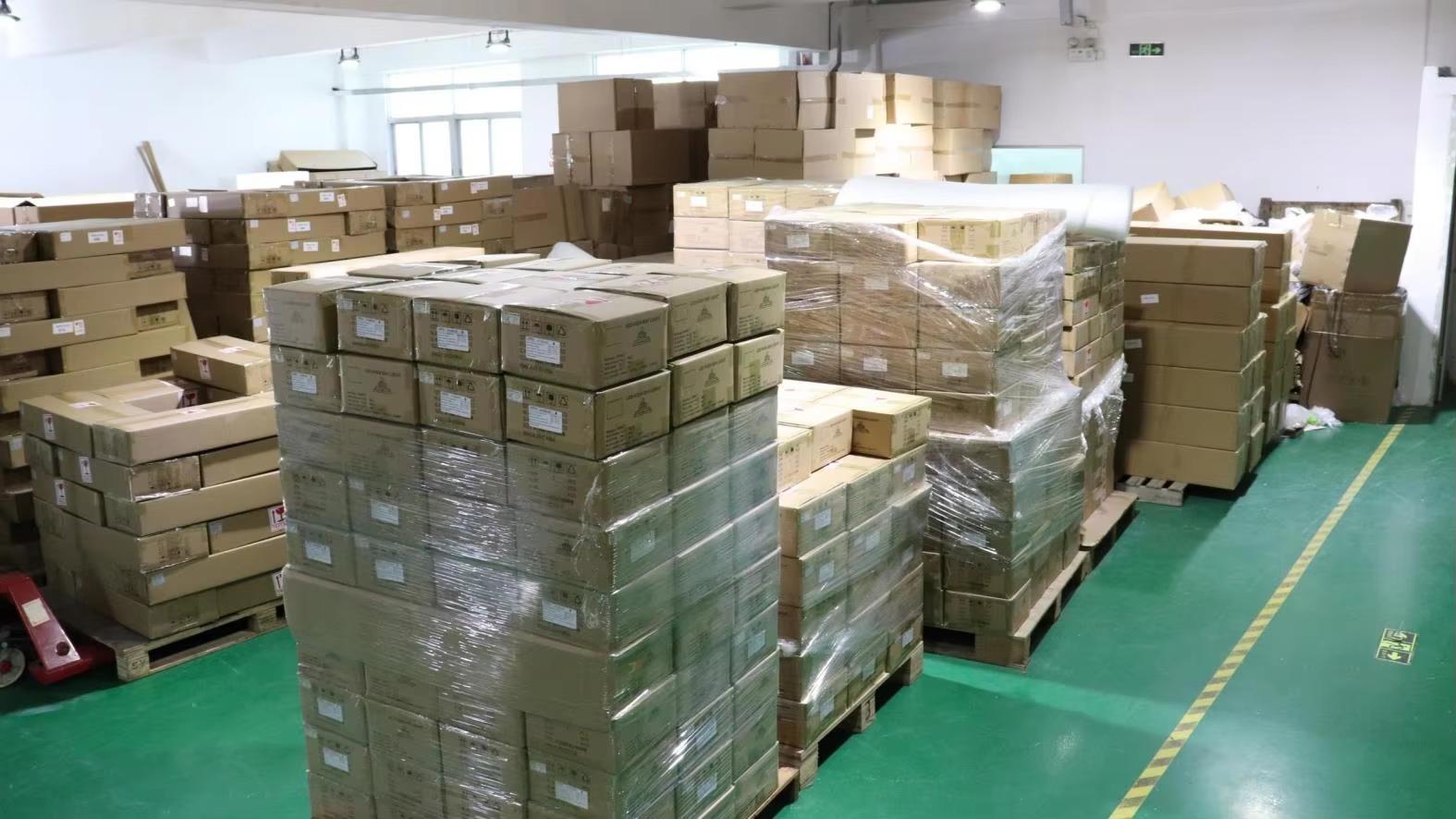
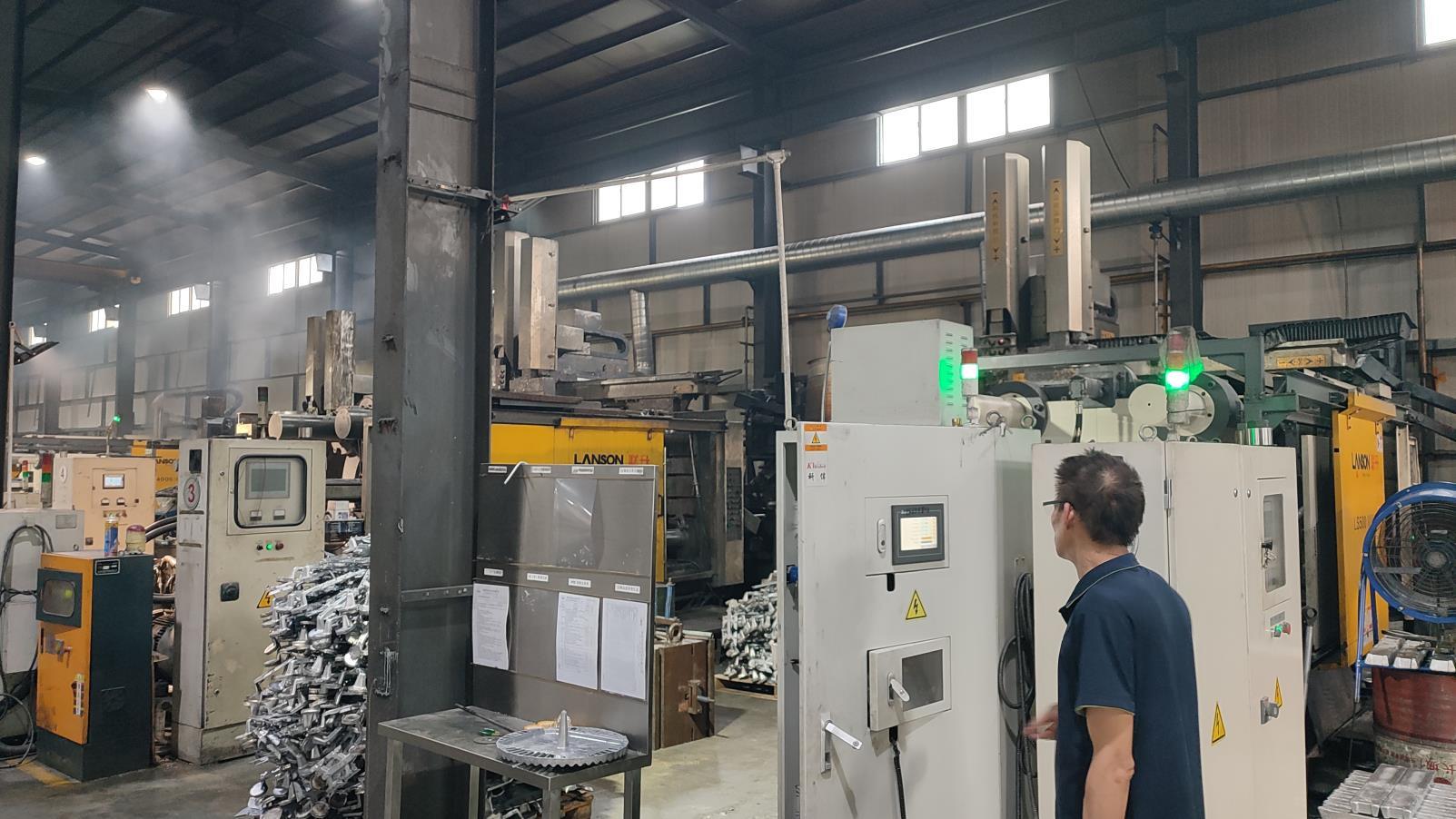
Navigating compliance within the EEA is vital. The CE marking indicates that our floodlights comply with three key European directives:
Directive 2014/35/EU governs electrical safety guidelines. It ensures that incoming high voltages do not present shock hazards, overheating, or insulation breakdowns under load.
Directive 2014/30/EU guarantees that the high-frequency switching frequency of our LED drivers does not interfere with nearby communication equipment, radar, or power grids.
Restricts hazardous materials (lead, mercury, cadmium, etc.) in the electronic components and structural soldering, simplifying end-of-life recycling and local environmental safety.
While CE certification covers basic European mandates, true industrial operations require a wider range of certifications. Our products are tested against additional global benchmarks to guarantee safety and performance:
| Certification | Target Region | Technical Verification Scope |
|---|---|---|
| TÜV / GS | Germany / Europe | Rigorous safety testing and factory inspections for electrical components. |
| ENEC | European Union | Recognized European safety mark for luminaire assemblies and control gear. |
| SAA / RCM | Australia / New Zealand | Verification of plug connections, terminal blocks, and regional EMC compatibility. |
| LM-79 / LM-80 | Global Standards | Verifies luminous flux, color efficacy, and optical decay profiles over extended runtimes. |
| IK Rating (IK08-IK10) | Global Standards | Impact protection testing, confirming resistance to mechanical shocks and vandalism. |
Guangdong province stands as the absolute epicenter of the global optoelectronics supply chain. Contracting with a specialized manufacturer like Guangdong Lijah Light Co., Ltd. provides vertical integration advantages that smaller regional assemblers cannot duplicate:
Immediate access to high-grade ADC12 aluminum ingots for precise die-casting, high-transmittance optical PC lenses, and silicon gaskets, minimizing logistical delay.
Close integration with tier-1 driver manufacturers (MeanWell, Inventronics, Sosen) and chip packaging plants (Osram, Lumileds, Cree), ensuring component compatibility and reduced lead times.
High-tonnage die-casting, automated drilling, and robotic CNC finishing ensure consistent quality while significantly reducing structural labor costs.
Procurement managers and engineering leads look beyond simple pricing. Strategic purchasing requires evaluating performance matrices that guarantee high runtime and minimal maintenance:
Maintaining low junction temperatures is critical for LED longevity. Our die-cast aluminum heat sinks feature optimized vertical convection fins that maintain internal temperatures below 65°C under normal load.
Power grids are subject to fluctuations. Industrial-grade floodlights require a high power factor (PF > 0.95), low Total Harmonic Distortion (THD < 15%), and built-in 10KV surge protection devices (SPD).
Different installations require tailored beam spreads. We offer asymmetric (e.g., 80°x150°) and symmetric (e.g., 60°, 90°) optical distributions to maximize ground illuminance while minimizing glare.
The global LED market is shifting from static fixtures to intelligent platforms. To future-proof installations, procurement strategies should account for these trends:
Integration of 0-10V, DALI, and Zigbee/LoRa wireless protocols allows for dynamic dimming, automated scheduling, and real-time power monitoring across facilities.
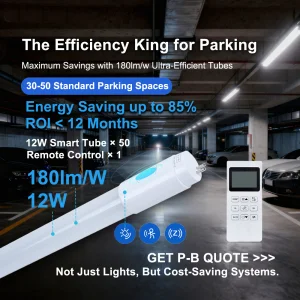
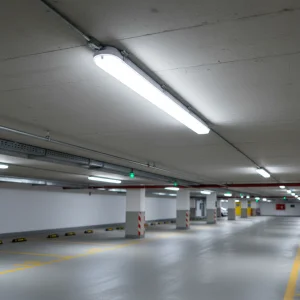
Integrated microwave motion sensors and photocells (daylight harvesting) ensure fixtures operate only when needed, reducing energy consumption in warehouses and parking lots.
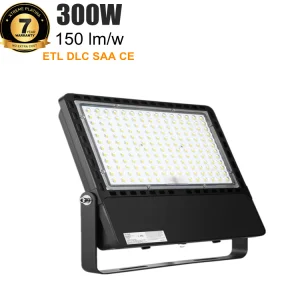
New LED packaging technologies achieve system-level efficiencies exceeding 150-180 lm/W. This reduces overall energy consumption while keeping total fixture size and weight manageable.
Lighting demands vary by location. A single model is rarely suitable for every environment. We design our floodlight systems with configuration adjustments for specific scenarios:
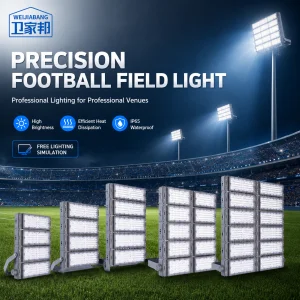
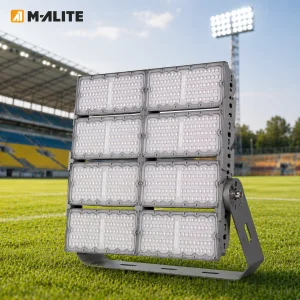
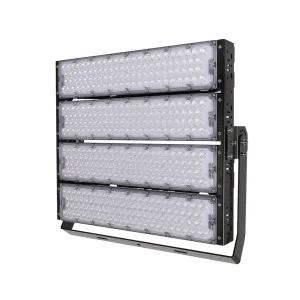
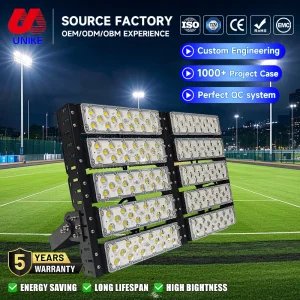
High-power modular floodlights (400W–1200W) provide glare-controlled, high-color-rendering (Ra > 80 or Ra > 90) illumination, suitable for high-speed sports broadcasting and visual comfort.
Coastal installations face saline air and high humidity. Anti-corrosive powder coatings and electrophoretic surface treatments protect our fixtures from structural corrosion.
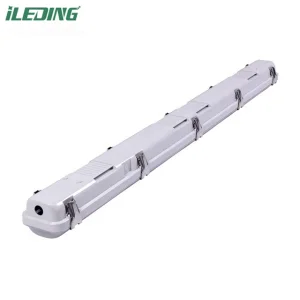
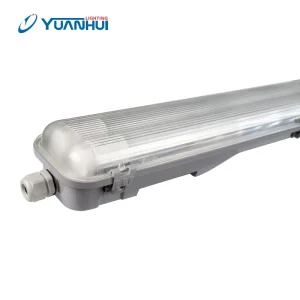
Operating at temperatures down to -30°C requires specialized components. Our vapor-tight and tri-proof fixtures utilize low-temperature drivers that maintain stable output without warm-up times.
 Lijah Light